Gulf Jobs Newspaper: How Newspaper Job Ads Work and How to Use Them Safely
Gulf jobs newspaper ads in Pakistan and India are printed by licensed recruiters for approved demands, and every genuine ad carries the two numbers that matter: the recruiter's licence number and the demand's permission number (BE&OE in Pakistan, eMigrate in India). Verify both numbers free online before you travel to any interview or pay any fee.
Long before job websites, Gulf jobs travelled by newspaper — and the gulf jobs newspaper pages of India and Pakistan still carry fresh demands every week, often before any website shows them. This page explains how those ads work and how to use them without getting cheated.
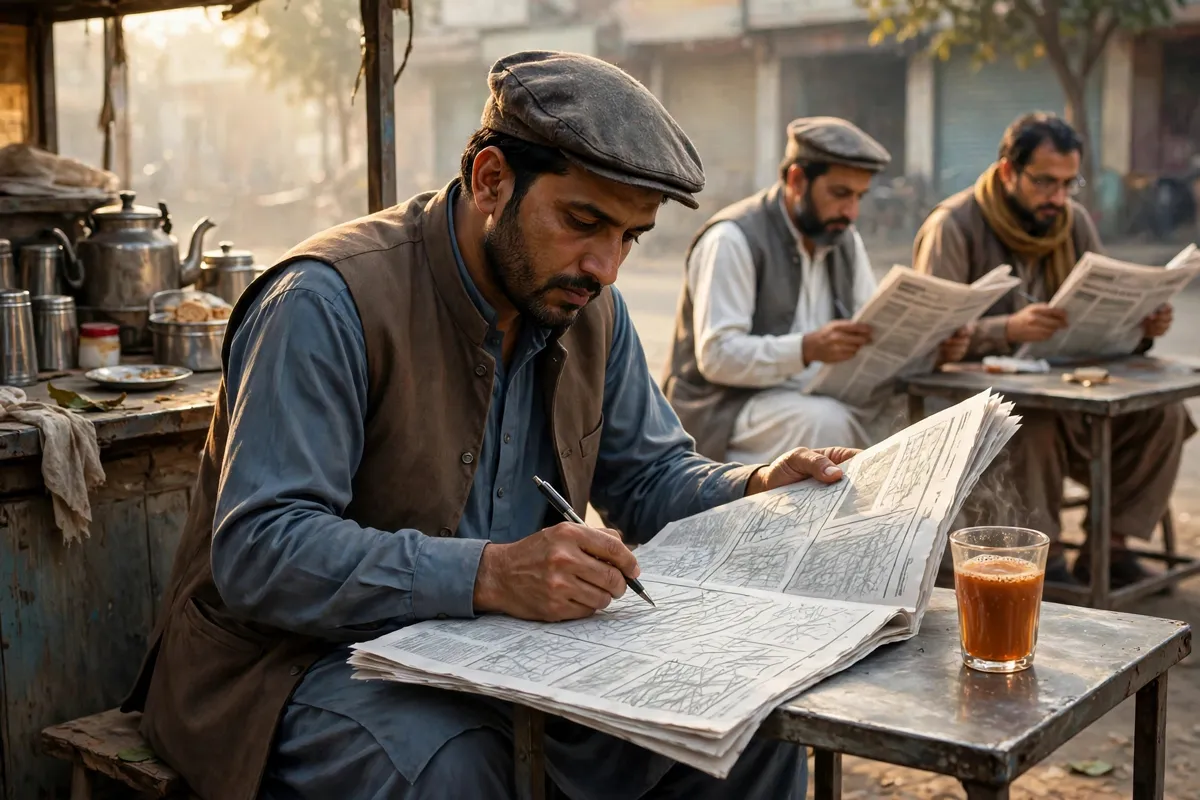
Why newspapers still matter for Gulf jobs
Licensed recruiters are required to advertise approved demands publicly, and newspapers are where many of them do it: a Saudi or UAE employer sends a demand, the home country's authority approves it (BE&OE in Pakistan, eMigrate in India), and the recruiter prints the ad with the trade, salary, interview date and venue. Workers who read these pages see demands the day they open, and good demands often close within days.
There is another reason the paper still earns its place on the tea-shop table. A newspaper ad is printed on a date, in public, with the agency's name on it. It cannot be quietly edited afterwards, and it cannot vanish the way a social media post can. So treat the clipping as the beginning of your paper trail: when an ad interests you, keep it, or at least a clear photo of the whole ad, licence line and all.
Where and when do these ads appear?
You will find them in the classified and employment pages of daily newspapers in both countries — the pages workers fold open first, in tea shops, bus stands and barber shops, every morning. Recruiters print through the week as demands open, and the rhythm is unforgiving: a demand printed today may hold its interview within days and close within the week. That is why the same men who "just read the paper" always seem to hear about jobs first. They are not better connected. They are simply reading the source that everyone else waits to hear about second-hand.
Second-hand is where the danger creeps in. By the time a demand reaches you as a forwarded message or a loose screenshot, the numbers on it may have been changed — and there is a whole section on that trick further down this page. The paper itself, or a listing that republishes the paper's numbers unchanged, is what to trust.
Two approval systems stand behind these ads
A Gulf job ad in a Pakistani paper and the same kind of ad in an Indian paper look alike, but they answer to two different systems at home. Knowing which one stands behind your ad tells you what to verify, and where.
| Pakistan | Recruiters are Overseas Employment Promoters (OEP) licensed under the Bureau of Emigration & Overseas Employment (BE&OE). Each approved demand carries a BE&OE permission number, and before departure the worker's passport receives the Protector of Emigrants stamp. |
| India | Recruiters hold a Recruiting Agent registration, demands are approved through the eMigrate system, and emigration clearance runs through the Protector of Emigrants offices. |
Different offices, same idea: the demand is approved before it is advertised, the approval carries a number, and the number can be checked. An ad from either country that hides its numbers is asking to be trusted blind, and blind trust is the one thing this page exists to retire.
How to read a newspaper job ad
- Licence number — the recruiter's OEP licence (Pakistan) or Recruiting Agent registration (India). No number, no trust.
- Permission number — proof that this exact demand was approved by BE&OE / eMigrate. Verify it free online (see our licence verification guide).
- Interview date and venue — genuine walk-in interviews name a real place and date. "Call for details" with no office address is a warning sign.
- Documents list — passport, CNIC/ID, photos and certificates, as our documents checklist describes.
- Salary and benefits in print — compare the printed figure with other ads for the same trade; a salary double the market rate is bait, not luck.
Can I trust an ad just because it is printed?
No, and this distinction matters. A newspaper prints what a recruiter submits; the printing is not the approval. The approval is the permission number, issued before the ad, by BE&OE or eMigrate — and the ad is trustworthy exactly as far as that number verifies, no further. This is not a reason to distrust the papers. It is the reason the system gives you numbers at all. A printed ad with verifiable numbers is a public promise you can test in two minutes. A printed ad without them is ink.
A typical ad, line by line
Newspaper ads are squeezed into small boxes, so every line is short and loaded. Here is an example ad of the kind you will see any week, taken apart piece by piece. The numbers in it are illustrative; the shape is real.
| "Urgently required for a reputed company in Saudi Arabia" | The country is named, the company often is not. That is normal at this stage. Ask the company's name when you call, and again at the interview. |
| "Steel Fixer — 20 · Shuttering Carpenter — 15" | The trades and how many men are needed. A demand with post counts is a real workforce order, not a vague promise. |
| "Salary: SAR 1,200 + overtime" | The printed salary is the figure to hold the agency to. Compare it with two or three other ads for the same trade before you get excited or suspicious. |
| "Food, accommodation, transport and medical by company" | The benefits line. These words decide what your salary is actually worth, and they must match what later goes into your written agreement. |
| "Interview: Tuesday, 9 am, at our office. Bring original passport, CNIC, photos and certificates" | A real date, time and place. You carry your originals to show them; you do not hand them over to be kept before you are selected. |
| "Lic. No. 3555/RWP · Permission No. 123456" | The most important line in the whole box. These two numbers are what you verify, free, before spending a rupee on travel or fees. |
| "Contact: 0300-XXXXXXX" | The phone line. When you call, the person who answers should name the same agency that is printed in the ad. If he names a different one, stop there. |

Read in this order — numbers first, salary second, excitement last — and a newspaper ad stops being a puzzle. It becomes what it was always meant to be: a public notice you can check.
The copied-ad trick: when the paper is real and the number is not
Here is a trick built for the phone age. Someone photographs a genuine newspaper ad — real agency, real licence line, real demand — and forwards it on WhatsApp and social media with one small change: the contact number at the bottom is now his. You call, he answers in the agency's name, and the fraud runs from there, wrapped in a genuine ad's credibility.
The defence is plain. Trust the number printed in the paper itself, not a number typed under a forwarded photo. If you found the ad as a forward, find the original: the day's paper, or a listing that carries the demand with its licence and permission numbers unchanged, the way InGulfJobs republishes them. And when you call, listen to which agency name is spoken. The printed name and the spoken name must match. The day they do not, the conversation is over.
Before you travel for the interview
Interviews are often in another city, and the bus fare comes out of your pocket. Spend ten minutes on the phone first. Ask which agency is speaking and whether it matches the ad. Ask whether the permission number covers this exact demand. Ask what documents to bring, and whether any fee will be charged at any stage — and if so, whether a printed receipt is given. A genuine agency answers all of this without irritation. Then verify the two numbers online, and only then book your seat.
What happens at a walk-in interview?
For office and professional posts, an interview may be a conversation across a table. For the trades these pages mostly carry — welders, steel fixers, carpenters, electricians, masons — expect something more practical: a trade test. At many walk-in interviews, held at the agency's office or at a technical institute, you are handed the tools of your trade and asked to show the work: lay the blocks, run the weld, wire the board. This is good news for a skilled man. Your hands answer questions that words cannot.
So go ready for work, and carry your certificates and any record of past work you have. Arrive before the stated time; test places fill in order, and a man who arrives at noon for a nine o'clock test has usually missed more than the test. And remember where you stand in the process: the interview day is for selection. Documents and medicals follow for the selected, and fees belong to their proper stages, against receipts — never as cash pressed into a hand at the venue gate.

What happens after you answer an ad?
Workers new to the newspaper pages often ask what the road looks like beyond the interview. For a genuine demand, it runs like this:
- The call. You phone the printed number, confirm the agency, the demand and the interview day.
- The check. You verify the licence and permission numbers online, free, before travelling anywhere.
- The interview. You attend at the named venue with your documents — originals to show, copies to leave.
- Selection. The agency or the employer's side selects candidates for the printed trades. Selection comes first; money talk only after it.
- Documents and medical through the proper channels, against receipts.
- The agreement. Trade and salary in writing, matching the printed figures you answered to.
- Protector and departure. The Protector of Emigrants stamp in Pakistan, or emigration clearance in India — then you fly on a work visa.
Any road that skips the check, or asks for money before selection, has left the map this page describes.
A five-minute morning routine for newspaper readers
- Read the employment pages with a pen in hand. Circle only your own trade; chasing every trade wastes the week.
- For the best ad, copy down the licence number, permission number, interview date and venue before anything else. Numbers fade from memory by noon. Ink does not.
- Verify the two numbers online. Two minutes, free.
- Phone the agency and ask the questions in the section above.
- Put the clipping in your documents folder, and tell your family which agency and which demand you are following.
Five minutes, most mornings. That small habit is the whole difference between reading the newspaper and being led by it.
Ads in other languages, salaries in other currencies
The same demands appear in English papers and in Urdu and regional-language papers across Pakistan and India. The language changes; the legal lines do not. A licence number is a licence number in any script, and it is the line to find first when an ad is hard to read. If you cannot read an ad fully, sit with a teacher, a family member or anyone you trust who reads it well, and read the numbers aloud together.
Salaries are printed in the employing country's currency — riyals, dirhams, dinars. Compare ads in the same currency before you compare amounts. A larger figure in a different currency is not automatically a larger salary, and an agent who wants you excited will happily let you make that mistake uncorrected.
From newspaper page to this website
InGulfJobs collects the same licensed newspaper demands and republishes them as proper online listings: the licence and permission numbers stay on the page, the expiry date is shown honestly, expired ads are marked and removed from search, and applying is one tap on WhatsApp instead of travelling to an office just to ask a question. New demands are added daily, the same rhythm as the papers. If you want to see exactly what happens to an ad before it appears here, read how we verify every job.
See the newest demands now: Saudi Arabia · Qatar · Kuwait · Oman. Or register for job alerts and get the day's new demands on WhatsApp, like a daily newspaper on your phone.
Stay safe with newspaper ads
- Verify licence + permission before travelling to any interview.
- Never pay cash at an interview without a printed receipt on the agency's letterhead. (The full list: red flags of job fraud.)
- Original documents stay with you until you are selected, copies are enough for interviews.
- If the ad's phone number answers as a different agency than the one printed, walk away.
A note for families reading along
In most homes the newspaper is read by more than the man who will travel. That is a strength, so use it deliberately. The family should know the agency's name, the two numbers, the interview city and, later, the departure date — and should hold copies of the clipping, the receipts and the agreement at home. If anything goes wrong at any stage, the family holding the paper trail is the family that can act.
One line to remember: the newspaper shows you the demand; the licence check tells you whether it is real. Do both, every time.
Key points
- Gulf jobs newspaper ads are published by licensed recruiters for demands approved in advance — with a BE&OE permission number in Pakistan and eMigrate approval in India.
- Every genuine ad carries the recruiter's licence number and the demand's permission number, and both can be verified free online before you travel or pay.
- Read every ad in the same order: licence and permission numbers first, salary second, interview details third.
- A forwarded photo of an ad may carry a changed phone number. Trust only the number printed in the paper itself.
- Original documents are shown at interviews, never surrendered before selection, and every payment is made only against a printed receipt.
- InGulfJobs republishes the same newspaper demands online with the licence and permission numbers kept on the page, honest expiry dates, and expired ads marked.
Questions readers ask
I saw an ad on Monday and by Wednesday the agency said the seats were full. Was that a trick?
Usually not. Good demands genuinely close within days, sometimes faster for common trades. That is why workers watch the newspaper pages daily. Note the agency's name, keep reading, and be ready earlier next time: documents in a folder, numbers verified the same morning the ad appears.
The same ad has appeared again after two weeks. Is it a fresh demand?
Not always. An agency may re-advertise the unfilled balance of the same demand, or a fresh demand may have opened for the same company. The permission number tells you: same number, same approved demand, so ask what stage it has reached; a new number means a new approval, verified the same way.
The ad offers "free visa, free ticket." Should I be suspicious?
Not by itself. Some employers do cover these costs, and honest ads say so. Free is a word to verify, not a word to fear or to trust on its own. Check the licence and permission numbers, and make sure the free offer is still standing in writing when you reach the agreement stage.
There is no licence number in the ad, but the office looks large and busy. Can I proceed carefully?
No. Size proves nothing; a busy office can be busy with other people's mistakes. The licence number is the one thing a legal recruiter always has and always prints. Without it there is no verification, no complaint path and no careful way to proceed. Choose an ad that gives you numbers to check.
I live far from the interview city. How do I avoid a wasted journey?
Do everything in this page that can be done from home first: read the ad line by line, verify both numbers online, phone the agency and ask the questions listed above. Only travel when the demand checks out and the agency confirms the interview is on. Ten minutes of checking has saved many workers a full day's fare — and some of them a great deal more.
The ad says to bring a registration fee to the interview. Should I pay it?
Only after the demand verifies, and only against a printed receipt. Verify the licence and permission numbers from home first; if they check out and a genuine agency charges a fee at a proper stage, the receipt is your proof and your protection. Cash handed over at an interview for an unverified demand, with no receipt, is exactly how fraud collects its first payment.
An agency advertises under one name, but its office board shows another. Which do I trust?
Trust the name on the licence — and only after that licence verifies. Names on boards and ads should match the licensed name. If they do not, ask why, in the office, before anything else. A real agency has a simple answer. If the answer is fog, walk away and choose an ad whose names line up.
I found the same demand online. Is it safer than the newspaper ad?
Neither is safer by itself; the numbers decide in both places. The demand is the same demand, and the licence and permission check is identical. What an online listing adds is convenience: expiry dates shown honestly, expired ads marked, and applying by WhatsApp instead of a journey. What it must never change is the demand's numbers — on InGulfJobs listings they are carried over unchanged.
Can I answer an ad on behalf of my son or brother?
You can do the reading, checking and phoning with him, but the application itself is his. Interviews are attended by the man who will travel, documents carry his name, and selection judges his trade with his own hands. Families help best at the checking stage, where a second pair of eyes on the numbers is worth more than any shortcut.